
Darlinghurst: The Suburb That Never Stopped Moving
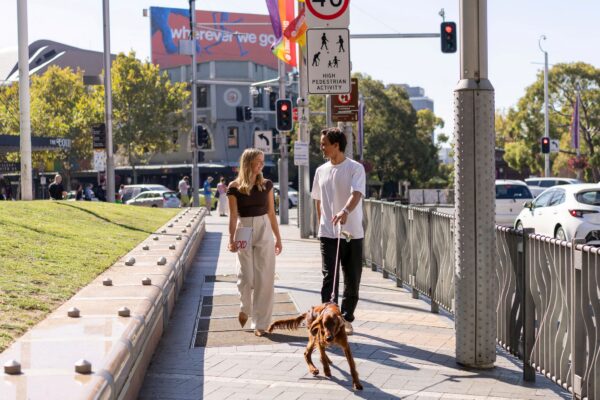
Some suburbs follow the city’s lead. Darlinghurst has always been slightly ahead of it.
A precinct shaped by proximity and character
Darlinghurst sits at the eastern edge of the CBD, bounded by Kings Cross to the northeast, Paddington to the east, and Surry Hills to the south. In area it is modest. In density of experience — cultural, commercial, and social — it punches well above its size.
The suburb’s grid of Victorian terraces, converted warehouses, and mid-century apartment blocks has attracted successive waves of residents who value the irreplaceable combination of walkability, community, and inner-city immediacy. That pull has not diminished. If anything, it has strengthened as the appeal of car-dependent living has declined among the demographic most active in Sydney’s property market.
What draws people here
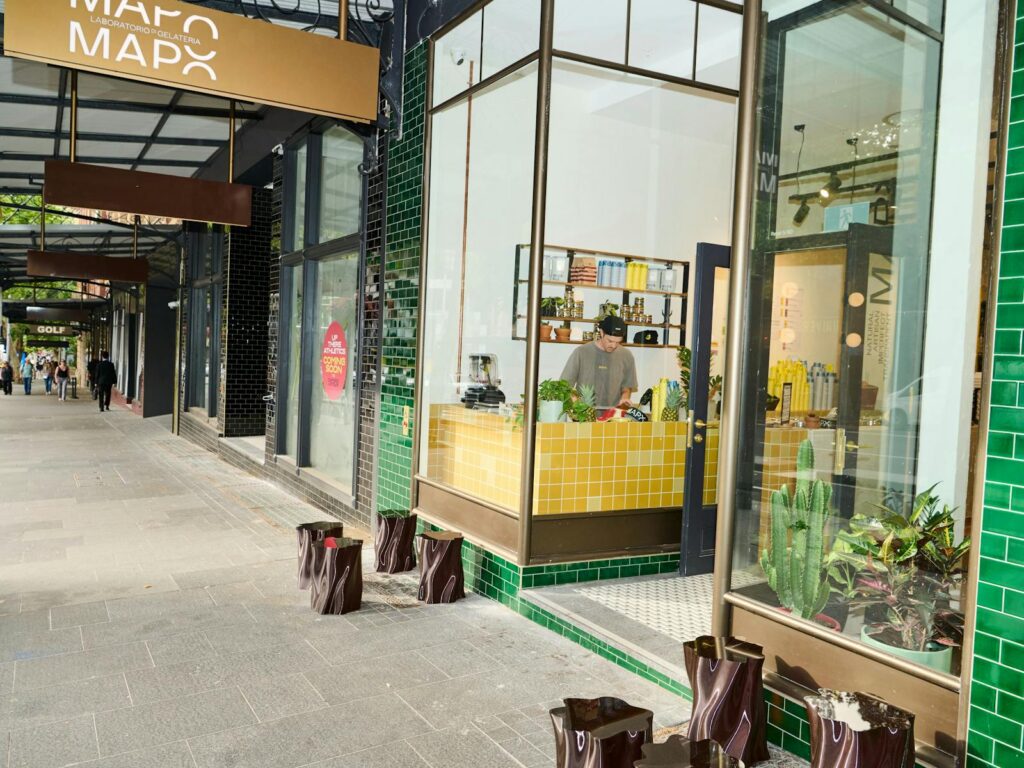
Oxford Street — the suburb’s main artery — has been Sydney’s creative and cultural corridor for decades. Its identity has shifted over time, but the street’s fundamental character endures: independent retailers, long-established hospitality venues, and the kind of streetscape that rewards being on foot.
Victoria Street, running north from Kings Cross through the suburb’s heart, is one of Sydney’s most intact Victorian streetscapes. The plane trees, the terrace facades, the calibrated scale of the built environment — these are the things that cannot be replicated and do not date.
St Vincent’s Hospital and the surrounding health and research precinct provides a permanent employment anchor. Sydney Jewish Museum, the National Art School, and the Australian Design Centre give the suburb a cultural density that most precincts ten times its size cannot match.
The property landscape
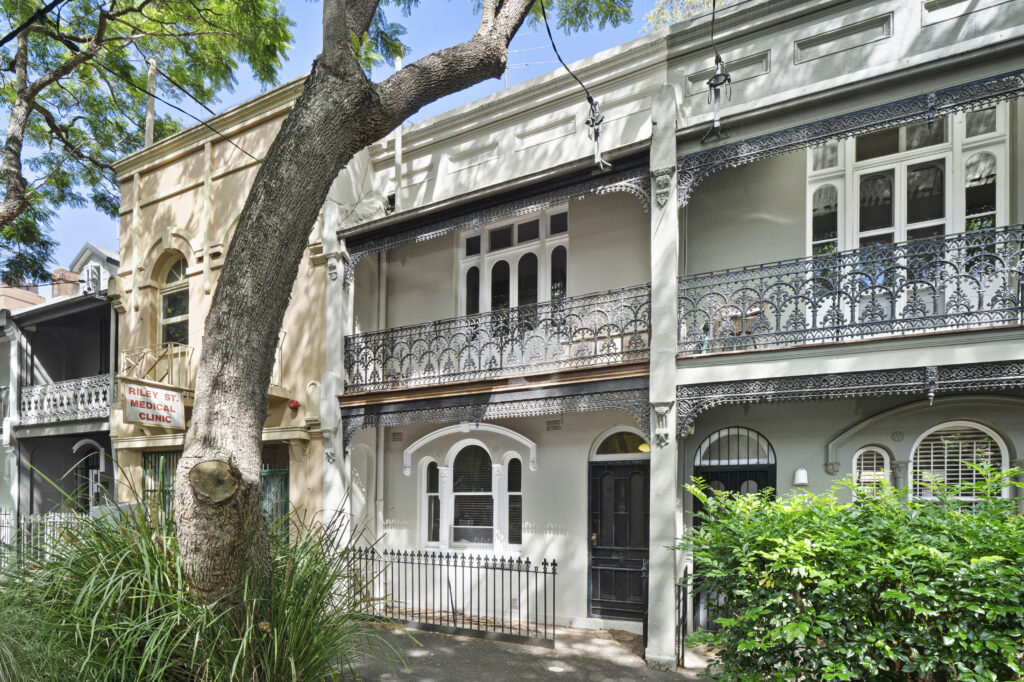
Darlinghurst’s housing stock is diverse in form but consistent in age. Victorian and Edwardian terraces — many now substantially renovated, some untouched — make up the majority of the residential stock alongside Art Deco and post-war apartment buildings.
The suburb attracts a broad range of buyers: owner-occupiers drawn by the lifestyle, investors drawn by deep and consistent tenant demand, and downsizers from the eastern suburbs who want proximity without compromise. Demand is structural rather than speculative — underpinned by the suburb’s employment access, amenity, and the finite supply of the housing stock.
Properties that have been sensitively renovated — retaining original detail while updating functionality — command a sustained premium. The suburb rewards quality. It has the audience for it.
The long view
Darlinghurst is not a suburb in transition. It has already arrived. The investment case rests not on a future that is hoped for, but on a present that is well established — and a structural undersupply that makes well-located stock here a genuinely scarce commodity.
For buyers who understand what they are acquiring, that scarcity is the point.
